Pages

Showing posts with label animals. Show all posts

Saturday, July 9, 2016

Meet Nestor Eguez, Author and Teacher

Nestor Eguez is a technology teacher who immigrated with his family from Uruguay, South America to California twenty years ago in search of a better life. Since then, he has been teaching at adult and vocational schools. He had always had an interest in writing, and one day while helping his children with a school project, he experienced the moment that this story was born.

Nestor is the author of a novel called Kalima: The Secret of the Jungle. He is at work on the second book in this series and hopes to release it in the fall of this year.

1. How did you come up with the idea for Kalima?

Ten years ago, my kids wanted to do a puppet play as a school project. After they tried a couple of options, with no good results, I decided to help them with an original story. Two days after that, one morning on my way to work, the story came to me. That simple.

2. Why did you choose a zebra as your main character?

A lot of people asked me the same question, also if Kalima could be a different jungle animal. Well, a zebra was the first that came to my mind. After a little research, I found out that they are smart and strong animals, perfect for the kind of mission Kalima will have to accomplish.

3. As someone who is busy raising a family and also working as a teacher, when do you find time to write?

Honestly, it is very hard, especially because when you have a free time to do it, usually your inspiration Muse is busy.

4. When you were growing up in Uruguay, who were some writers whose work influenced you?

Definitely there were a lot of books that impacted me, especially in high school, but if I have to mention one, definitely was The Quixote by Miguel de Cervantes.

5. What is your advice to other writers who are working on writing and publishing their first novel?

Well, I'm going to pass along a couple of good suggestions that a wise author told me a long time ago.

a) A story always has room for improvements, but at some point you have to finish it, and move on.

b) You have to be prepared to deal with rejection. Writing a good story is the easiest part of publishing a book.

Thanks, Nestor!

Thursday, January 14, 2016

Introducing Penguin Run Saga on Google Play

I recently interviewed one of the game designers from Universal Games Team about their car racing game called Neon 2 Cars Saga, available on Google Play. They have so many fun and creative games that I wanted to feature another game in its own post, so this post is dedicated to their game called Penguin Run Saga.

Do you love cute animal games? This game lets you be a cute penguin who is trying to catch fish, but who also encounters obstacles like snowballs and ice cones. The more fish you collect and points you rack up, the more colorful penguins you unlock. As with other games from Universal Games Team, you can compete against players all over the world using the global ranking feature.

I asked the game's creator to share what he wants people to know about the game and he described it as "a frustratingly addictive and challenging game with cute and smooth graphics." He added that his goal in creating the game was to give players an opportunity to test their reflexes with the high-speed action in the game.

The setting of this game is really fun, and as you play, be sure to carefully watch the behavior of the Antarctic and Arctic animals.

To learn more and to download the game and become a penguin legend, check out https://play.google.com/store/apps/details?id=com.cartoon.penguin.run.

Sunday, September 27, 2015

Meet Debra Roberts, Honeybee Educator and Advocate

Debra Roberts is an international honeybee educator and advocate. She teaches natural, compassionate beekeeping, and sacred relationship with bees. She stewards her bee sanctuary in the Appalachian Mountains. Learn more about Debra and her Sacred Path of Bee series of classes by visiting her website, HolyBeePress.com.

1. How did you first become a beekeeper?

Beekeeping was never a plan, but it was clearly a call. I sort of stumbled into it in the remarkable way that life sometimes unfolds. In 2004, my health crashed and I took a six-months' sabbatical that changed the rest of my life. As I was recovering, I felt inspired to take a pilgrimage to Hopi to pay my respects to the family of Thomas Banyacya, an elder who had passed and had touched my life profoundly at an earlier time in my life. I had gotten guidance to bring honey as a gift to his family. I wasn't a beekeeper (and I wasn't thinking about being one at the time), but a neighbor of mine sold some honey to me. Off I went from North Carolina, across US Route 40, arriving days later at the Banyacya family door in Arizona, quart jars of honey in hand. Thomas' daughter-in-law, whom I had never met, greeted me at the door. I said I was Debra Roberts from North Carolina and I had just come to pay my respects because of how Thomas Sr. had touched my life. And I wanted to give them a gift. She welcomed me in, received the jars of honey I gave her, and said, "Why I was just telling my husband, Thomas Jr., that we were out of honey and I needed to go to the store to get some more..."

So when I look back, there was something about that moment that marks when bees came into my life... something bee-ish, full of grace, quietly slipped under my radar and into the heart of my life. By the end of that year, I ended up in bee school, and I have been at the feet of bees ever since.

2. What is your goal or intention with your honeybee sanctuary?

I am a honeybee educator, speaker, and advocate. I teach and travel around the world, and I am totally bee-sotted. I am not commercial and rarely harvest any honey. My bee sanctuary is right next to our house in the mountains of Western North Carolina. It is a place that is holy to me. I spend time there every day that I am in town. My path is to explore sacred relationship with the bees, to learn from them, and to inspire and support others in doing the same, and it is also to provide a safe place for bees to flourish in the world. The bee sanctuary is a place I express my respect, love, reverence, devotion, and gratitude for them. This place and space is also to honor others. The sanctuary is filled with precious objects that are meaningful to me and other people, placed mindfully around the bee sanctuary to represent prayers for the well being of the bees, particular people and animals, and for the benefit of all life. As I move around the yard daily, these prayers are regularly enlivened. More than anything, the bee sanctuary is place of expressing and sharing my love for these precious wing-ed ones and for creating a healthy place for them to thrive, especially in these times where their health and well-being is so challenged.

3. What inspired you to create your Sacred Path of Bee series of classes?

I fell into friendship years ago with a wonderful woman named Layne Redmond, who was a renowned frame drum teacher, musician, researcher, and artist. She and I discovered, in our unfolding friendship over the years, that many of the experiences I was having in my sacred-in-the-ordinary bee-tending life were resonant with some of the ancient ways of the bee priestesses that Layne had been exploring while researching what later became her seminal book, When the Drummers Were Women. Neither of us called ourselves bee priestesses, but nevertheless, those words help describe a sacred territory that was so enlivened in our lives. Layne invited me to share about bees and the sacred many times in her gatherings and conferences, and we went on to create a free public offering on bees and the sacred with the intention of later co-creating a multi-part online series. Unfortunately, Layne passed away in 2013 so I went on to create the series myself. I launched The Sacred Path of Bee in August of this year, and it is offered in her loving memory. The other source of inspiration for this series are the honeybees who have colonized my mind, heart and consciousness and inspire me every day of my life.

4. Who are some of your special guest collaborators in The Sacred Path of Bee?

I have invited ten remarkable people from around the world to join me in this series. Each are a world and a wonder. To describe just a few of them, I have invited Jacqueline Freeman to join me, a visionary who communicates with bees and who wrote the widely acclaimed book The Song of Increase, Returning to Our Sacred Partnership with Honeybees. Also invited is Horst Kornberger, who wrote Global Hive, Bee Crisis and Compassionate Ecology, who teaches at the Rudolf Steiner College in Perth, Australia. And there is Kaylynn Sullivan TwoTrees, an artist, educator, activist, and elder who has spent her life at the crossroads, where species, cultures, beliefs and the unknown intersect, collide, and evolve. All ten guests bring a unique perspective to our understanding of bees and their vast blessings in our lives.

5. Why is it important for us to forge more connections with bees in our world?

Since Colony Collapse Disorder reared its head in 2006, it is now much more widely and commonly known that we depend on honeybees for over a third of the food we eat (and I would add, food we really enjoy eating). From my years with the bees, I think the opportunity they bring in helping us to understand some of the deeper issues and opportunities in life is even more important. It is my belief that many of the challenges in this world stem from our disconnect with nature--both within us and outside of us. When we steward bees in a bee-centric rather than bee-business-centric way, there is an opportunity to learn about the interconnectedness we share with all life. A higher consciousness naturally is awakened and enlivened when we spend time with honeybees in a respectful way (rather than treating them as livestock). More women than ever have stepped into the world of bees in unprecedented numbers. This started around 2007, and I believe it represents a compassionate response to the challenges bees are facing. I see this compassionate expressed in both the men and women I teach in the world and who are participating in the Sacred Path of Bee series. I celebrate the growing numbers of beekeepers and bee appreciators that are taking an interest in the bees with a primary intent to help them. If there is any one simple thing I could say about my own life with the bees, it's realizing that love itself is the ultimate activism. The Sacred Path of Bee is my offering to the world and to the bees, in the hope that more love can come their way and spread around to the rest of life. For it is sorely needed... and it's time.

Thanks, Debra!

Saturday, February 28, 2015

Meet Michelle Tomars, Author of The Plaid Family Stories

Michelle Tomars is originally from Minnesota but has lived in Wisconsin most of her life. When she is not writing she spends much of her free time working with horses, which gives her inspiration for some of her stories. Read about The Plaid Family by visiting www.plaidfamilybooks.com, and check out her books on Amazon.

1. How did you come up with the idea for The Plaid Family?

I've been a freelance writer for several years and have always wanted to--and planned to--eventually write a book. Sometimes, though, you get so busy writing things for other people that there never seems to be enough time to put down your own thoughts. I was certain my first book would be a YA novel because all of the book ideas I had seemed to point towards that. I had several outlines made for different stories, but couldn't seem to find the time or the motivation to really dig into any of them. None of them felt right for my first book. Then I went over to my parents' house one night. My father was bursting with excitement, and I knew he must have a new painting to show me. He started pulling out these beautiful watercolor scenes. All of them were winter scenes, all had a different animal and all had a person wearing... plaid.

See, this is Plaid Son feeding the horses... And this is Plaid daughter riding her horse," he explained excitedly.

He went through every watercolor and showed me the different family members doing daily chores and activities.

"I want you to make a story about them," he said. "Will you write a little story to go with the pictures?"

I shook my head. "No." I smiled. "This isn't a story. It's a series."

And just like that, The Plaid Family Adventures was born.

2. Did you and your dad do creative projects together when you were a child?


Yes, we are that family who wrote scripts for made-up stories and then acted them out and made home movies. :) I remember one in particular where my dad acted out the part of an alien. We had him dressed up in a Halloween mask and a green jumpsuit. The special effects were lacking a bit, but it was still good, creative family fun.

3. What age of readers did you have in mind while writing the books?


I think the 6-10 year-old range seems to enjoy them the most. I do have some friends, however, who have read them to their younger kids with success.

4. How do you choose the stories to tell in your books?


Our animals actually play a key role in the storytelling. Jake, the horse in book 1 (The Runaway Horse) is a real horse on our family ranch. And I can vouch for the fact that he is just as naughty in real life as he is in the story! Annie, the cat in book 2 (The Lost Kitten), lives with my parents. And the parts of the story that pertain to how they acquired her are very true. Then of course as the author, I get to add in all the fun parts that also make it a work of fiction!

5. What has been the response to your work so far, and are you working on some other books as well?


The response has been very positive. Book 3 in The Plaid Family Adventures (The Rescue Horse) is almost ready to go to the editor. The Rescue Horse is inspired by a thoroughbred stallion I rescued last winter. I'm pretty excited about this particular story. It's going to be action-packed and full of fun. In the story, I'm also introducing some new and very interesting characters from a neighboring town. At this time, I also have plans for book 4 and 5 and am working on a separate young adult novel.

Thanks, Michelle!

Tuesday, August 12, 2014

Meet James of Service Dog Certifications

James started Service Dog Certifications to help people understand their rights when it comes to service dogs, emotional support animals, and therapy dogs. James is a dog lover with three rescue pups that he adopted from the shelter. Shelter dogs can make amazing service dogs, and he wants to get the word out about this as well!

1. Why did you decide to name your site "Service Dog Certifications" when the law doesn't actually require that a service animal be certified?

Many people with service dogs are discriminated against and questioned about their disability. We feel that service dog identification cards with pertinent information are necessary for making access easier and protecting the rights and privacy of handlers. We want to help those that want to be free with their service dogs, but do not want to announce their disability to complete strangers. Service dogs id cards are not required, but we feel that we are bringing a needed service to those that do not want to argue with uninformed people.

2. What are some examples of ways that people with service animals have been discriminated against?

Service dogs have the same access rights to public property as humans. Service dogs are allowed to go anywhere their human handler is lawfully allowed to go. Many people are unaware of this law and try to block service dogs from entering public places. There are many disabilities that are not visible to the eye, and those people with "invisible" disabilities should not have to suffer from discrimination.

3. Why do you think there isn't greater awareness of the legal rights around the use of service animals?

This is a question I have been asking myself. Greater awareness for service dogs should be available to the public. We believe that http://servicedogcertifications.org is helping to bring awareness and providing educational information to people in need of service dogs.

4. What are some of the different ways that service animals provide therapy, assistance, and support?

Service dogs can perform many different tasks to assist their handlers. There are service dogs that assist their handlers with tug based tasks, carrying based tasks, medical assistance tasks, and crisis assistance tasks, and dogs who alert handlers about noises, etc. There are a variety of ways that service dogs support their handlers in and out of the home.

5. How are animals trained to provide service, and how can individuals let people know about the training their pet has received?

According to the ADA, service dogs can be trained by dog trainers or by handlers. Handlers can get service dog in training vests from http://www.servicedogcertifications.org/product/service-dog-harness-vest/ to let people know that their dog is in training. We also provide service dog id cards for those who want to provide information regarding their service dogs and the laws surrounding service dogs in general.

Thanks, James!

Wednesday, May 14, 2014

Books for Kids about the Animals of Australia

Michelle Ray is an author from Australia who has finished work on the first book in a unique new series of stories to teach children about the animals of Australia. Her newly released book is called A Huntsman Spider In My House, and it is geared toward kids ages 0 to 5.

The book is fantastic and colorful, with the dual purposes of fun visual reading and educating children about Australia. The story promotes understanding of and interest in animals of all sizes. It's the first title in the Little Aussie Critters Childrens Book Series.

Michelle is a former police officer who is excited to launch her new career as a children's book author. She is also an active traveler and consults with businesses about producing effective seminars and conferences.

To learn more about A Huntsman Spider in My House, check out the book's page on Amazon.

Wednesday, January 15, 2014

Meet Mildred Potash, Author

Mildred Potash was born in Brooklyn, New York. She has always been an animal lover. Her very first pets were two rats, and they inspired her to write a children's book called Millie and Cupcake, which is available on Amazon and Barnes & Noble.

1. When did you first start keeping rats as pets, and why did you choose rats for your pets?

I have had gerbils, dogs, cats, ferrets, hamsters, and guinea pigs. I was 18 years old when my friend told me about rats. He told me how smart his pet rat was. He told me how his rat would be waiting for him and climb up on his shoulder. He also told me how loving, smart, clean and playful she was. At first, I thought it was weird, but then I decided to adopt two rats for myself. I named them Cookie and Bella. I have been in love with rats ever since. Unlike hamsters and gerbils, rats love to play and be held. They love attention. I like hamsters and gerbils, but they do tend to nip and do not like to be held as much as rats do, and they sleep all day. I love rats because they all have their own personalities. They love to give kisses, sit on their owners' shoulders, play with their owners, and have little tug of wars--and they are easy to handle. Rats are really clean, cute, and funny, and they are really social animals.

2. What inspired you to write a children's book based on your experience having pet rats?

Honestly, I never thought I would write a children's book. I used to receive tons of emails about writing books, and I would just delete them. I had this pet rat named Cupcake; she was a sweetheart. We had such a strong bond, and after she passed away, I was so heartbroken. It took me awhile to get over her loss. After she passed away, I had a few ideas that popped up in my head, so I decided to write them all down. It did not occur to me right away, to write a story. I just started to write, and then I had a dream of the characters and the rest of the story. I wanted to honor my Cupcake and use her as the pet in my story. That's when I put it all together to create Millie and Cupcake.

3. What would you say to parents who feel hesitation around their kids having rodents as pets?

Based on my experience with hamsters, pets, rabbits, mice, and gerbils, I would compare them all to pet rats. I would explain to parents how wonderful rats are. I would explain to them that it's not true about rats being 'dirty." They are really clean, social, smart, funny, cute, and easy to take care of and handle. My pet rats make me laugh: after I handle my them, they always clean themselves. Rats love attention, and they do not sleep all day like hamsters and gerbils. Rats are also affectionate; they give kisses and love to sit on their owners' shoulders.

4. In writing a book based on your own experience, did you find it difficult to distill real life events down to a short enough story for a children’s book?

It wasn't really difficult. The only difficult part was making sure the story was clear and worded correctly. Part of my story is an expression of me. The little girl is shy and she loves animals.

5. Would you tell us a bit about the importance of animals and animal rights to you today?

I really love animals; I've always loved them since I was a little girl. They mean the world to me. It really hurts me when I hear those stories about people abusing or abandoning their pets. I just feel that people should speak up for and defend animals since they cannot speak for themselves. I adopt all of my animals. I do not understand why people use animals to make money like puppy mills. Why can't they treat them like animals instead of garbage? I would love to travel the world and save those poor helpless animals that no one wants.

Thanks, Mildred!

Wednesday, August 28, 2013

Meet Mario Fazekas, Wildlife Photographer and Author

Mario Fazekas is a wildlife photographer and the owner of Kruger-2-Kalahari.com. He has spent over 700 days on photo safaris in African National Parks such as the Kruger Park, Kgalagadi, and Pilanesberg in South Africa; Etosha in Namibia; plus Ngorongoro Crater and Lake Manyara in Tanzania. Mario is the author of the Photographer's Guide series of how-to photo e-books: The Photographer's Guide to Etosha National Park and The Photographer's Guide to the Pilanesberg National Park, both of which have been rated A+ by Apogee Photo Magazine.

1. When did you first become interested in wildlife photography, and how have your interests evolved over time?

My wife dragged me kicking and screaming to the Kruger National Park back in 1995 and from that initial trip as a day visitor, we have visited the various southern African parks and game reserves every year for our annual vacations and free weekends!

I started out with a Kodak point and shoot camera, realized that was insufficient and then progressed to a Minolta SLR and finally a Nikon DSLR system.

Initially I was interested in photographing mammals, such as the "big-five" as they are large and therefore easier to shoot, but I have now developed an interest in macro photography, photographing birds in flight and also landscapes.

2. What are some of the unique challenges in taking safari photographs?

In order to return home from an African safari with impressive images four things have to happen:

  • You need to find the subjects! If you cannot locate animals there will be nothing to photograph.
  • Be prepared to get up early! If you want to capture landscape and animal photographs with impact, you need to make the most of the blue hours (the hour before sunrise and the hour after sunset) and the golden hours (the two hours after sunrise and the two hours before sunset). You can sleep in at home, but while on safari you must be up and ready when the animals are most active and the light has the most impact and mood.
  • You should know a bit about your subjects. You don't have to be an expert in African animals, but know a little about their habitats and behaviors.
  • You need to be aware of your position in relation to the subject and the light source. Photography is known as "painting with light," so you must use your light source wisely.

3. What inspired you to share your knowledge in e-book format, and what has the response been to your books?

In 18 years we have captured over 300,000 images on film and digital. We started going through them a few years back and realized that our nature photographs had improved consistently year after year and that we had learned many, many lessons that would also help other photographers improve their skills.

We were going to publish traditional books but the publishers were so dictatorial that we decided to self-publish.

In our e-books, or site guides as they are also known, we share our proven strategies for finding elusive and/or exciting animals such as leopards, wild dogs, cheetahs, etc. We also provide advice on how best to use your photo gear, animal hot spots, advice on lighting at the waterholes and camps as well as photographing at night--basically, solutions to the challenges that most wildlife photographers will face while on safari.

We realised that there was a gap in the book market as there are many coffee-table books with lovely wildlife images and there are also many books on general photography, but not much providing detailed advice for visitors to specific national parks. A lion in Botswana's Chobe National Park may have different behaviors to an Etosha lion that in turn may have different habits to a Kruger Park lion in South Africa and so forth.

Our e-books are for all levels of photographers, from amateur to professional and for self-drive or guided safaris. The plan is that when you arrive at an area covered in these e-books, you'll know where to go when and what to expect and you will know what equipment and techniques will be most effective. Even field guides tell us that they learn a lot from these books!

What usually happens is that visitors waste valuable time getting to know the parks and animals and by the time they start getting "acclimatized" to the animals' current locations and habits, it's time for the visitors to go home! These e-books will prepare the visitor so that from the first day you arrive at the parks, you can be photographing the key animal species like a veteran.

The response to our e-books has been great! We have converted the Etosha e-book to Amazon's Kindle format and are in the process of doing the same for the Pilanesberg site guide, so people have a choice of buying either the PDF or Kindle version. We are finalising our Kgalagadi and Kruger e-books that will be available at the beginning of 2014 and we already have a list of people wanting to purchase them!

4. What do you suggest that photographers do to brush up their photography skills at home before going on safari?

Many amateur and even advanced photographers think that new photo gear is the answer to improving their photographs. We agree that photo gear is important but it is only one half of the solution--the other half is photographic vision or creativity. Many photographers become obsessed with "how" they capture the image (photo gear) and exclude the "why" (the photographic vision) and that is to the detriment of the "what" or end result.

Therefore my advice to photographers is that they should firstly read the key parts of their camera manuals and then actually go and use their cameras at the zoo, at home, or at an air show. We are amazed at how many people buy a new camera and then come on safari without having read even the quick-start guide and without having used the gear. Wildlife action can happen very fast, and photographers must know their cameras and lenses if they want to respond in time and capture good images.

Secondly they should read books and interviews by professional photographers, especially books written by Freeman Patterson and David DuChemin who are both masters of photographic vision. In addition, they should try and buy site guides to the specific national parks that they will be visiting as these books will provide explicit advice and not just general photographic advice. We are not the first photographers to publish e-books specific to certain parks. For example, Arthur Morris, the world's premier bird photographer, has published some excellent site guides for the various American parks and reserves.

5. If you could give photographers just a couple of pieces of advice before booking a safari trip, what would that advice be?

To focus on what we term the "five-P's." In addition to the first two P's of Preparation and Practice, which must be done at home before coming on safari and that we discussed in the previous question, you need to have these three additional traits, making up the 5-P's:

  • You must have a Purpose in mind before booking your destination. If you want to shoot as many mammals as possible, filling up your memory cards every day, then you should be going to Namibia's Etosha Park in winter. If you want to photograph birds and wildflowers, then you should be going to the Kruger Park or Kgalagadi in summer and so on. You should also try to be more of a "situation-driven" photographer as opposed to a "subject-driven" photographer--if you want to photograph a cheetah, but you come across a black-backed jackal hunting doves and the light is good, stop and photograph the jackal as you may not find the cheetahs that day.
  • Nature has its own time and you will see and photograph much more if you have Patience and spend time at bird-hides or waterholes instead of looking for just a few seconds and then driving on. Take some coffee and rusks with you in the mornings or some sun-downers in the afternoons--let the action come to you, which will make sitting and waiting much more enjoyable!
  • Finally, Passion will keep you motivated and disciplined in terms of the other four P's. If you are not enthusiastic about nature photography, you will tend to sleep in, miss the good light and go home with few, if any, "wow" photographs.

Thanks, Mario!

Sunday, August 18, 2013

Meet SG Johnson, Author

SG Johnson lives in a small country town in Indiana with her loving husband Daniel and their adorable Siamese cat named Katarina Rose. She has always had a dream to write about her love for animals. Her biggest inspiration is Katarina Rose.

The Adventures of Katarina Rose is a book based on this curious and active kitty, who goes on adventures every day and meets and learns about other animal friends along the way.

1. What inspired you to write a children's book about a Siamese cat?

I always had a dream to write a children's book and my biggest inspiration was my baby girl, Katarina Rose.

2. How is Katarina Rose like--and unlike!--other cats?

She has a personality unlike other cats. She looks and talks like she is human.

3. What are a couple of examples of some of the adventures Katarina Rose gets into while her mom and dad are at work?

Katarina meets a squirrel named Peanut and a deer named Chief, and they take the children on the adventures of living out in the country.

She teaches the children about the other animal friends along the way.

4. What age of children make up your intended audience for the book, and what has the response been from parents and children who have read the book so far?

The age group is anywhere from 3 on up.

They like the book and how it tells the story of the other animals, and they like the color pictures.

5. Did you create the illustrations for this book as well as the text? If you collaborated with an illustrator, what was that process like?

The cover of the book was my idea. The illustrations are from a free image website. I wanted to use pictures that children could relate to. Katarina Rose's real picture is in the back of the book.

Thanks, SG!

Friday, July 12, 2013

Meet Ashley Litz, Author and Third Grader

Ashley Litz (on the left in the photo below) is the author of No, No, Sammy! (available on Amazon) and a third grader in Georgia. She lives with her parents, sister, four lively dogs, and one easygoing cat. She loves to write, draw, play the piano, and participate in many school activities. Her hobbies include running, writing, reading, and crafts. Ashley's book was illustrated by the artist Linda Albrecht.

Emily Litz (on the right in the photo above) is the author's younger sister and was the model for the girl in the story. She is in the first grade. She lives with her family, four dogs, and one cat. She is involved in piano, Spanish Club, and Running Club. Her hobbies are drawing, making crafts, and writing stories.

Sammy is a black medium-sized poodle and is three years old. He is very lively, always happy and always wanting attention. He sometimes gets into trouble just like he did in the story but he never has a bad day. Happiness and love are very much a part of his personality.

Our interview today is with Ashley.

1. Why did you decide to write a book about Sammy?

My grandparents kept my sister and I after school each day. Emily got picked up two hours earlier than I did. When I got to their house that day, my Grandmother was telling me how Emily kept telling her black poodle, "No, no, Sammy!" each time he did something wrong that day. My Grandmother thought it might make a cute children's book so she began to write down ideas. As she worked on it, I kept telling her to write it differently, "to do it this way for little kids." When it was all done, I had written the whole story myself and my Grandmother liked the way I did it.

2. Does your sister feel like you did a good job describing her in your book?

Yes, Emily said that she thought I did a good job. Emily helped me to remember things Sammy had done and she had tried to teach him some good manners, so she helped me to describe her and the poodle.

3. Were there places where you had to change the real story about Sammy and Emily for the book, or is everything in the book something that really happened?

No, not really. Emily and I thought about different things Sammy had done, like digging holes in the yard, getting into the garbage, etc. He had done a lot of "bad" things so we had a lot of material to work with!

4. Did you give ideas to Linda Albrecht about the way you wanted the pictures to look to go with your story?

Yes, I did with the help of my Grandmother and Emily. We thought of things Sammy had done and wrote the story around those so then the artist drew images that described these events.

5. How did your grandma help you in writing and publishing your book?

My Grandmother thought of the story for the book which I then worked with, and she helped me to find an artist who was good and also affordable. We had a hard time finding someone who could draw animals and that is Mrs. Albrecht's specialty. Then my Uncle Jason did the hard part of putting images and writing together and publishing it to Amazon and CreateSpace.

Check out the book trailer for No, No, Sammy! below.

Thanks, Ashley!

Sunday, June 30, 2013

Meet Adam of Epic Wildlife on YouTube

Adam's YouTube channel, Epic Wildlife, is dedicated to talking about new animal species and wildlife stories that he personally enjoys. He is amazed by giant human-eating snakes roaming the wild and man-hungry sharks patrolling the ocean depths. He loves everything from huge spiders, mean crocodiles, hungry alligators, beautiful snakes, strange sea creatures, mysterious monsters, bigfoot sightings, endangered animal species, shark attacks, unique fish, and bizarre alien discoveries.

You can also keep up with Adam on Facebook. Below is the trailer for his YouTube channel.

1. When did you first become interested in stories about animals?

Growing up my family owned a lake house in South Texas in which I would spend a lot of my summers there. I enjoyed fishing, hunting, and exploring the uninhabited wilderness as there was always that sense of danger from the unknown. When I was 15, I was bitten by a rattlesnake and almost died, since then I've been fascinated by deadly animals, and I enjoy spending my time learning all about the different species that we share our planet with.

2. Where do you find the amazing footage you share on your YouTube channel?

I frequently visit a number of different wildlife blogs, new sites, and other related nature forums that share the same interests as myself, but lately I have to credit a lot of my ideas to my viewers who routinely send me messages on my Facebook page suggesting new animal species and wildlife tales that they also enjoy.

3. Why do you think people have a particular interest in stories about dangerous and/or mysterious animals?

I think people enjoy animals in one form or another. Nature can be scary as well as incredibly beautiful. There is still a large amount of our planet that is left to be discovered and so much wildlife to learn about.

4. Where do stories about aliens fit in with your interest in animals?

Stories of aliens are always coming up in the news, and myths surrounding these findings are just urban legends as to this date there hasn't been any concrete proof of their existence. Aliens find their way into wildlife as many times "so called aliens" are just rare animal species that most people do not know about.

5. What do you think are some factors that make a YouTube channel interesting and popular?

Having a genuine interest for the content you create plays a major role in vibe of a channel. In addition, YouTube, unlike television, has a great social platform that lets you connect with people of similar interests. It's important to address your audience by replying to comments and going a step further by sharing your passion beyond the video.

Thanks, Adam!

Introducing Discountdogpoopbags.com

Sometimes I think about landfills and certain things that surely account for a lot of the trash that adds up, and bags of pet waste always come to mind. In search of a solution, a Canadian company founded by animal lovers began selling two types of dog poop bags, some which are biodegradable and some which are compostable.

Their affordable bags are made in Canada while other competing products on the market are made in China, and they promise that the bags are sturdy enough that you don't have to be "afraid your hand might rip through."

They also sell compostable kitchen bags, and I'm curious to try their products because in my previous attempts at buying compostable bags, the bags were too thin to withstand the contents (not that I think I had a bunch of heavy kitchen waste, but the bags thought so!).

One other note: the bags are dark in color, so you and your dog can feel discreet about what you're carrying around on your walk!

Wednesday, June 19, 2013

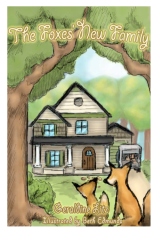
Excerpt from The Foxes' New Family by Geraldine Litz

One of my favorite interviews I've posted so far on With Five Questions was the interview I did with Geraldine Litz, a retired teacher, about her children's book, The Foxes' New Family, illustrated by by Beth Edmunds. The book is available in a paperback edition and as an ebook for Amazon Kindle.

It's a pleasure to welcome Geraldine back to the blog, this time to share an excerpt from her book.

For more about her work, be sure to follow her on Facebook.

In the excerpt below, Geraldine has kindly shared the first two chapters of The Foxes' New Family, as well as some illustrations from the book.

*

Chapter One

Two brown foxes stood near the edge of the trees and watched trucks come and go with furniture and people. They were not happy to see people move into the large house with the very big front and back yards. The house had been empty for a long time, and they were able to go into the yards to find water and sometimes food. No one had bothered them. Now their lives would forever be changed by the new people moving into the house.

The two foxes were feeling upset when they saw two young girls get out of a car that drove up the long driveway and stopped. The girls looked alike and were almost the same size. One had very long dark hair up in a pony tail and the other had blonde hair to her shoulders. Both were laughing and happy, running around the yard, exploring. It must have been their parents who got out of the car and watched them, smiling to each other.

"We're going to be happy here," said the woman.

"I think so, too," answered the man, as he took the woman's hand to lead her into the house.

The male of the foxes, who was a little bigger and his fur a little darker, turned to his mate. "They might be happy, but I don't think we will be anymore," he said to her.

The female fox had a sad look as she nodded in agreement. They faded into the trees, back to their den on the property adjoining the house’s yard.

Chapter Two

A few days went by and the two foxes watched the people set up their house and wander around the yards in the evening. As soon as the two girls came home from school, they would go out to play. Today the girls were running and chasing each other in the middle of the huge front yard when suddenly one stopped and pointed with delight.

"Look, Shannon! Foxes!!" The girl began to run toward the animals.

"Wait, Mary! Don't scare them!" shouted Shannon, but it was too late. The foxes disappeared back into the thick stand of trees that bordered their yard.

At supper that night, Mary and Shannon told their parents about seeing the two foxes.

"That is exciting," agreed their Dad. "But they are wild animals. Don"t try to touch them or chase after them. You could get hurt and you will frighten the foxes as well. Just leave them alone and let them continue to live their lives in the forest next door, just like they probably have always done."

"Your father is right," said their Mother. "Maybe we can watch them sometimes if we don't scare them away."

The next day Mary and Shannon watched for a sign of the foxes as they played ball in the front yard. They never saw the animals, and they were unaware that the two foxes blended into the trees and bushes, enjoying their view of the girls running and giggling.

"They seem like nice girls," the female fox said. She nuzzled her mate affectionately with her nose.

He nuzzled her back. "I think so, too," he finally agreed. "But we can't take a chance of letting them see us. You know we can’t trust humans not to hurt us or kill us, no matter how nice they look."

She sighed regretfully. "I know. And they are probably as scared of us as we are of them!"

The girls went into the house so the two foxes left to try to find some food and water, which was becoming harder to find as people moved in around them. They were competing with the deer and other wild animals.

Wednesday, May 29, 2013

Meet Geraldine Litz, Author

Geraldine Litz is a retired elementary teacher. She is an award-winning author and has published historical nonfiction articles in regional and national magazines. She lives in Georgia with her husband and family. She would love to hear from you via email. You can also like her author page on Facebook.

Geraldine's latest book is The Foxes' New Family, with illustrations by Beth Edmunds. Two foxes are dismayed to see a new family with young children move into a long vacant house. Their habitat borders the house's yards, and until now, they were free to roam the property looking for food. Now the foxes are afraid for their safety, but they soon learn the new family means them no harm. It is just the opposite in fact, as the people are kind to them. A tragedy strikes the foxes one night, and they learn just how kind the people really are to them. But will it take more than human kindness to save the wild animals? This book is based on a true story and is beautifully illustrated with colorful images which children will enjoy.

The book is available in a paperback edition and as an ebook for Amazon Kindle. Below is a photo of one of the real foxes who inspired the book.

1. Would you tell us about the true story that inspired your children's book, The Foxes' New Family?

My son and his family moved into a new house. Even though it is in a neighborhood, they are at the end of the street and are surrounded on three sides by woods. Two foxes began to appear in their yard. They have a gazebo, and the foxes seemed to get comfortable coming out when my son worked in it. The foxes would lie close by while he worked, so he and his family decided to put stainless steel bowls out there, one with hard dog food and one with water. The foxes took advantage of the offerings. In the fall, they were observed playing with a deer, with leaves, and eating out of the bowl in the company of a deer. I thought all of this was very neat and would make a cute children's book, especially when it is based on a true story.

2. What age of reader/listener did you have in mind when you wrote this book, and what have you heard so far from kids/parents who have read it?

I aimed it at ages 7-12, but it has turned out to be popular from pre-K through old age. Small children like to have it read to them. I visited a school and signed copies of my book. All of the elementary children loved it, and I sold many copies. Adults have read it and said it was nice to read a book without violence, etc., and all ages have enjoyed the beautiful illustrations. I have a friend who knows a lady who read it to older adults with mental and physical challenges who live in a facility together. When she finished, they said they loved it and wanted to read it again! I was so pleased to hear that they had enjoyed it!

3. What was your process like in collaborating with Beth Edmunds, the illustrator of your book?

My son introduced her to me. Beth Edmunds had always liked art, but she didn't have any training. I was willing to let her try the book illustrations, and I am glad I did. She did a fantastic job. We live in separate states, but with email, I would send her my ideas for parts of the story, and she would come up with the illustration for it. It went very smoothly. She is a young woman, and this has inspired her to get some formal training and pursue illustrating further.

4. In writing for children, how do you draw from your experience as a retired elementary school teacher?

Over 34 years, my classes and I have read hundreds of books which fed into my desire to read. I began to know which books would appeal to them. Happy stories with good endings were their favorites. There were so many books for children where the animals died in the end which made all of us cry. So we chose those books that made us feel good, and I wanted to write that type of story about animals which had a happy ending.

5. Why do you think that true stories about wild animals are so compelling to readers of all ages?

Children normally love animals of all kinds, and they enjoy learning about all of them, but especially about wild animals and their habits. Perhaps that is true because wild animals are not often readily available for us to see except in zoos. Petting zoos are so popular because of this desire to touch animals they don't see every day such as dogs and cats. This love of animals carries forth in most of us as we grow to old age.

For more about The Foxes' New Family, view the book trailer below.

Thanks, Geraldine!

Saturday, January 5, 2013

Meet Elizabeth Dodwell, Author and Speaker

Elizabeth Dodwell is an author, speaker and champion of the under-dog. Inspired by the need of her own rescued pets for healthy treats, she has created a selection of dogtail and pupcake recipes that are delicious, nutritious and served liberally with humor.

For more information about The BARKtender's Guide to Dogtails and Pupcakes, see Elizabeth Dodwell's website, as well as her Facebook page.

1. What motivated you to write a book of nutritious recipes for dogs?

Over the years I've had a number of rescued dogs with digestive issues. Currently, two of my pets have problems, in particular, Angel, who had a brutal start in life and was nearly starved to death. Although she's now a very healthy and happy seven-year-old, two bouts of pancreatitis (inflammation of the pancreas that prevents the digestion of fat and can be deadly) and allergy problems require that she maintains a strict diet regimen, which translates to "boring." The vast majority of commercial pet foods and treats contain gluten (a protein found in wheat, barley and rye) and tend to be high in fat, so a large percentage of my dogs' diet has always been homemade. The idea for "Dogtails and Pupcakes" sprang from the Cocktail and Cupcake enthusiasm for people. It occurred to me that I could create nutritious and delicious doggy versions that would also be easy and fun, and it worked.

2. How did you come up with the recipes, and how did you test them?

Creating the recipes was tons of fun. I spent a lot of time researching "safe" foods for dogs and then matched ingredients that I thought would work well together. Mixing the drinks is as easy as shaking up or blending a cocktail for yourself. The pupcakes took a little more effort to perfect because some of the ingredients--meat, for instance--are not the sort of thing you'd normally use in a cupcake.

Anyway, my "kids" (Angel, Vinny and Coco) along with several of their pooch pals had a wonderful time as taste-testers. Their number one dogtail pick was the Angel's Kiss--yogurt, peanut butter, carob and vanilla--and there were several favorite pupcakes including Droolin' On a Sunday Afternoon and You Can't Lick It, made with cheddar cheese, beef, and carrot.

I should mention here that some of the pupcake recipes in The BARKtender's Guide... are made with wheat. However, if your pup is gluten free, the flour can simply be substituted.

3. Why don't more people cook for their pets, rather than relying on store-bought foods?

Many of us don't even cook for ourselves, let alone our pets. We lead busy, sometimes hectic lives and the fast food mentality has become part of our culture. Sadly, I must say. Because it takes only a little time and effort to prepare simple foods that are much healthier and tastier than any pre-packaged items you buy off the shelf, and meal preparation is a great time for ALL the family (people and pets) to bond. When I make pupcakes, somehow the dogs just know it's for them, and they line up in the kitchen to "oversee" operations. And when I pull the first batch from the oven, they are beside themselves with joy and anticipation. It makes me laugh every time.

4. As an author, how do you strike a balance between sharing (how-to) information and offering humor to your readers?

Hmm. I've never thought in those terms. I simply love to laugh, and I like to share the humor. And people are far more likely to pay attention to something that gives them a chuckle or two than to read through a boring tome or listen to a dull speech. I actually give talks on lessons you can learn from your dog with subjects like "How to take the ball and run with it" and "How to sniff out the possibilities," and humor is a big part of that.

5. Have you utilized The BARKtender's Guide... to help support pet rescue?

Yes! A portion of all sales is donated to pet rescue. I have a couple of "pet" (ha ha) charities; however, I am always willing to consider partnering with pet-affiliated groups and companies to help them raise awareness or funds for their business or cause.

Thanks, Elizabeth!